
Popular articles
Recent discussions on forum
Find out how roasters and farmers can collaborate to navigate price volatility
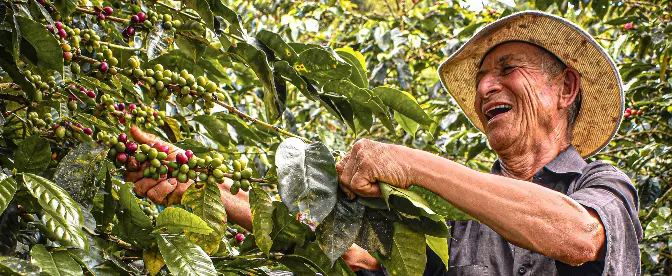


Coffee is one of the most traded commodities in the world and is a significant part of the global economy. Millions of people worldwide depend on coffee for their livelihoods. As such, coffee has far-reaching effects on the economy, society, and communities across the globe.
Volatile coffee prices have far-reaching consequences precisely due to the significance of coffee in so many global economies. Price fluctuations affect farmers, roasters, and consumers alike, although in very different ways. In this article, we explore how coffee price changes affect the livelihoods and long-term goals for coffee farmers and their families.
Why Do Coffee Prices Fluctuate?
Coffee prices have seen increased volatility in recent years, and while agricultural commodities like coffee have always been vulnerable to external factors, recent years have amplified these pressures. Extreme weather events have affected coffee-growing regions in Latin America and Africa, while droughts, floods, and changing growing conditions continue to influence yields across multiple commodity sectors.
At the same time, geopolitical developments, transportation bottlenecks, labour shortages, and currency fluctuations can create sudden shifts in supply and demand. Regulatory changes are adding another layer of complexity.
The demand for coffee globally has been steadily increasing, particularly in emerging markets in Asia, Africa, and the Middle East. Countries with a growing middle class and rapid urbanisation such as Japan, India, Vietnam, and China are seeing increasing demand for coffee and coffee products, which has driven up the overall cost of coffee worldwide. The demand within producing countries is also increasing, which means fewer exports to markets in North America and Europe. These traditional coffee markets are also looking to purchase more coffee than ever before.
These factors combined are the driving forces behind coffee prices in the commodity market.
How Does Price Volatility Affect Coffee Farms?
Increasing coffee prices are most often talked about in terms of impact to customers but at the other end of the supply chain, it is the farmers who often bear the brunt of these price swings. For example, in 2023 the ICO reported that the global coffee market faced a deficit of around 6 million bags of coffee due to adverse weather conditions, including droughts and frosts, particularly in Brazil, the world’s largest coffee producer. This deficit then drove up the cost of production for farmers who had to contend with rising input costs, including fertilisers, labour, and water for irrigation.
While rising prices may seem beneficial at first, production costs may outweigh the income generated from selling coffee. Rising production costs force many farmers to abandon coffee cultivation in favour of other crops or reduce their investments in coffee to varying degrees. Reduced cultivation worsens the supply and demand issues we discussed earlier, further exacerbating price volatility.
The instability that coffee farmers face has driven many of them and their children to switch careers and abandon coffee cultivation altogether. This economic instability leads to widespread social impacts as well with this being a major cause of rural migration. Younger people in particular are moving towards urban centres and different careers which could lead to future shortage of skilled and knowledgeable coffee workers and growers.
How Roasters and Farms Can Work Together
Coffee is not just a highly traded commodity, but a vital part of several global economies and the source of livelihood for millions of farmers and their families. As such, ensuring sustainable, traceable, and transparent coffee trade is in the interest of both farmers and roasters, and everyone else in the coffee supply chain.
Price fluctuation and the socioeconomic instability it brings can only be mitigated through investment in sustainable farming practices, climate change adaptation, and a better pricing system that gives farmers the ability to plan ahead and live better lives now. Building closer relationships and focusing on long-term business between roasters and farmers is key to making this change.
Firstly, building trust between roasters and farmers can only benefit both parties. Transparency on both ends of the supply chain ensures trust and fair prices that don’t exclude farmers from the profits of their crops. Second, by investing in long-term relationships with farmers, roasters gain access to more of the growing process, allowing them to make better purchasing decisions as well as giving them access to rarer or more specialised coffee lots.
Forward contracts between roasters and coffee growers can be a powerful tool to achieve this goal. A forward contract of coffee is an agreement to buy a certain amount of green coffee at a pre-decided price and to be delivered in the future. Sometimes these contracts can even be negotiated before a harvest or even several years ahead of delivery, allowing roasters to choose exactly the coffee they want rather than wait to choose based on market volatility. Popular coffee lots or rare micro-lots can sell out quickly, and a forward contract enables roasters to lock in their choices.
For farmers, these contracts allow them the security they need to plan ahead, purchase the agricultural inputs they need, invest in sustainability, and protects them from the shocks of a volatile coffee market. For roasters, they can also invest in sustainability on farms, bolster their ethical sourcing claims, and gain access to a steady supply of coffee that fits their needs. A system like this benefits traders and consumers as well, since traders are also ensured transparency and stability while consumers get to make better choices about the coffee they buy.
The way ahead for roasters and coffee farmers is clear: build closer and more reliable relationships, focus on long-term business, invest in sustainability and new technology, and together, we can create a coffee supply chain that benefits all.
A good cup of coffee starts at the farm. By stabilising prices and investing in farms, we can ensure good coffee for a long time to come.
Sustainability Practices
About the author
Join me in discovering the wonderful world of coffee! As a writer, coffee is my fuel and newfound passion. I love writing about new coffees, sustainability, and coffee culture around the world. I'm always discovering new things about coffee and the industry, which I share with the great community here at Era Of We.
Recent discussions on forum
©2026SEWN Technology Solutions ABAll rights reserved
©2026 SEWN Technology Solutions AB All rights reserved